
A water treatment maintenance schedule is the single most effective tool a commercial building operator, facilities manager, or property owner can put in place to protect their water systems, extend equipment life, and avoid the disproportionate cost of reactive repairs. Without a structured programme, water treatment systems quietly degrade: filters exceed their service life, softener resin becomes exhausted, scale accumulates in pipework, and the hygiene standards that regulators and insurers require begin to slip.
This guide covers everything UK businesses need to know about building and managing a commercial water treatment maintenance schedule, from daily operational checks to annual line disinfection, chemical dosing calibration, and Legionella monitoring obligations. Whether you manage a single commercial property or a portfolio of sites, the principles here apply and the cost case for getting this right is compelling.
TL;DR
- A structured water treatment maintenance schedule reduces unplanned downtime by 30 to 50% and cuts maintenance costs by 18 to 25% compared to reactive approaches, according to research from osapiens.com.
- Effective schedules are tiered: daily operational checks, weekly inspections, monthly water quality sampling, quarterly equipment servicing, and annual overhauls including full system line disinfection.
- Chemical dosing systems require daily verification, monthly calibration, and quarterly pump overhauls to ensure consistent treatment delivery and COSHH compliance.
- UK businesses must meet Legionella monitoring and sampling obligations under HSE Approved Code of Practice L8 and HSG274, including monthly temperature checks and risk-based microbiological sampling.
- Sovereign Water provides fully managed Smart Maintenance contracts covering all of the above for commercial water treatment systems across the UK, including free site assessments to get you started.
In This Article
- Why a Water Treatment Maintenance Schedule Matters
- What to Include in Your Commercial Schedule
- Frequency Breakdown: Daily to Annual Tasks
- Chemical Dosing: Maintenance, Calibration and COSHH Compliance
- Annual System Line Disinfection and Testing
- Legionella Monitoring, Sampling and L8 Compliance
- Smart Maintenance vs Reactive Maintenance
- How to Build Your Water Treatment Maintenance Schedule
- How Sovereign Water’s Smart Maintenance Works
- Frequently Asked Questions
Why a Water Treatment Maintenance Schedule Matters
Commercial water treatment systems are working continuously, often under conditions that accelerate wear: high flow rates, variable water chemistry, temperature fluctuations, and constant demand. Without a documented maintenance schedule, the inevitable result is degraded performance, shortened equipment life, and compliance gaps that carry regulatory and reputational risk.
The consequences of neglected water treatment maintenance are well documented. Scale accumulation in pipework and heat exchangers reduces energy efficiency and accelerates corrosion. Exhausted filtration media allows sediment, chlorine, and dissolved solids to reach downstream equipment. Softener systems running past their regeneration cycle deliver hard water to boilers, dishwashers, and coffee machines, shortening their operational life significantly. Chemical dosing pumps running out of reagent or losing calibration silently stop treating the water, with no visible indication until corrosion, scale, or biological growth becomes apparent. In the worst cases, inadequately maintained water systems create conditions for Legionella bacteria to proliferate, creating a serious public health risk and significant legal liability for building owners and managers.
Beyond equipment protection, UK businesses face specific compliance obligations. The Water Supply (Water Quality) Regulations 2016 establish water quality standards that commercial operators must meet, whilst the Health and Safety Executive’s Approved Code of Practice L8 places a legal duty on employers and building owners to assess, monitor, and control Legionella risk in water systems. A properly implemented maintenance schedule is central to demonstrating compliance with both.

“Building engineers can extend equipment life and reduce operating costs significantly by taking a proactive approach to water system maintenance.” Source: Clearwater Shelton, Water System Maintenance for Building Engineers.
What to Include in Your Commercial Schedule
A comprehensive commercial water treatment maintenance schedule covers every component of the system, from point-of-entry treatment through to point-of-use equipment, with each element assigned a maintenance frequency appropriate to its role and the consequences of failure.
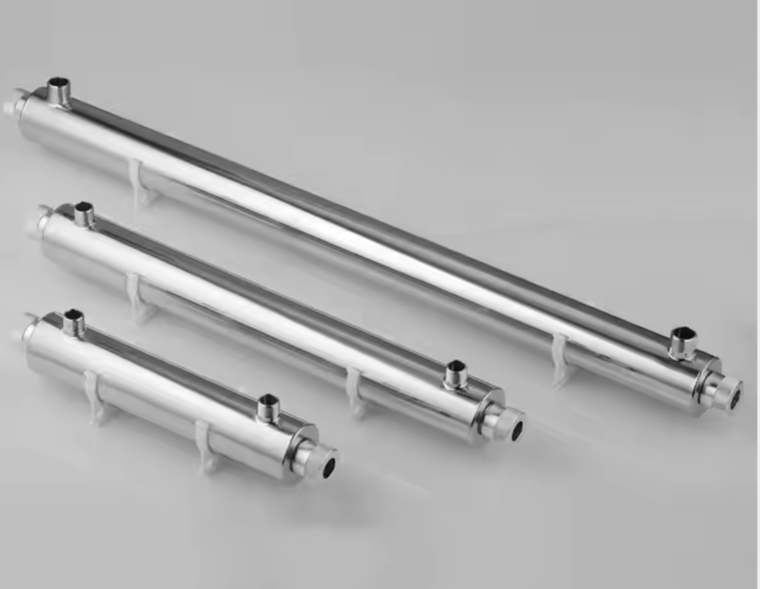
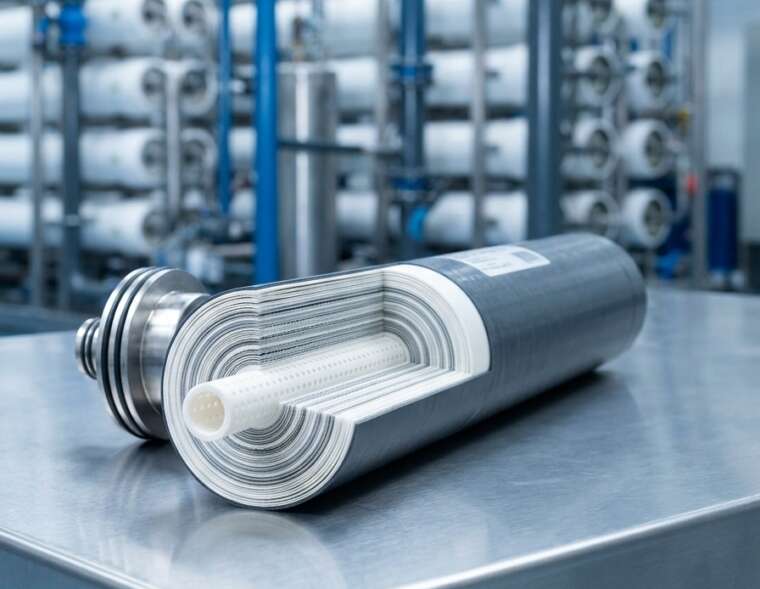
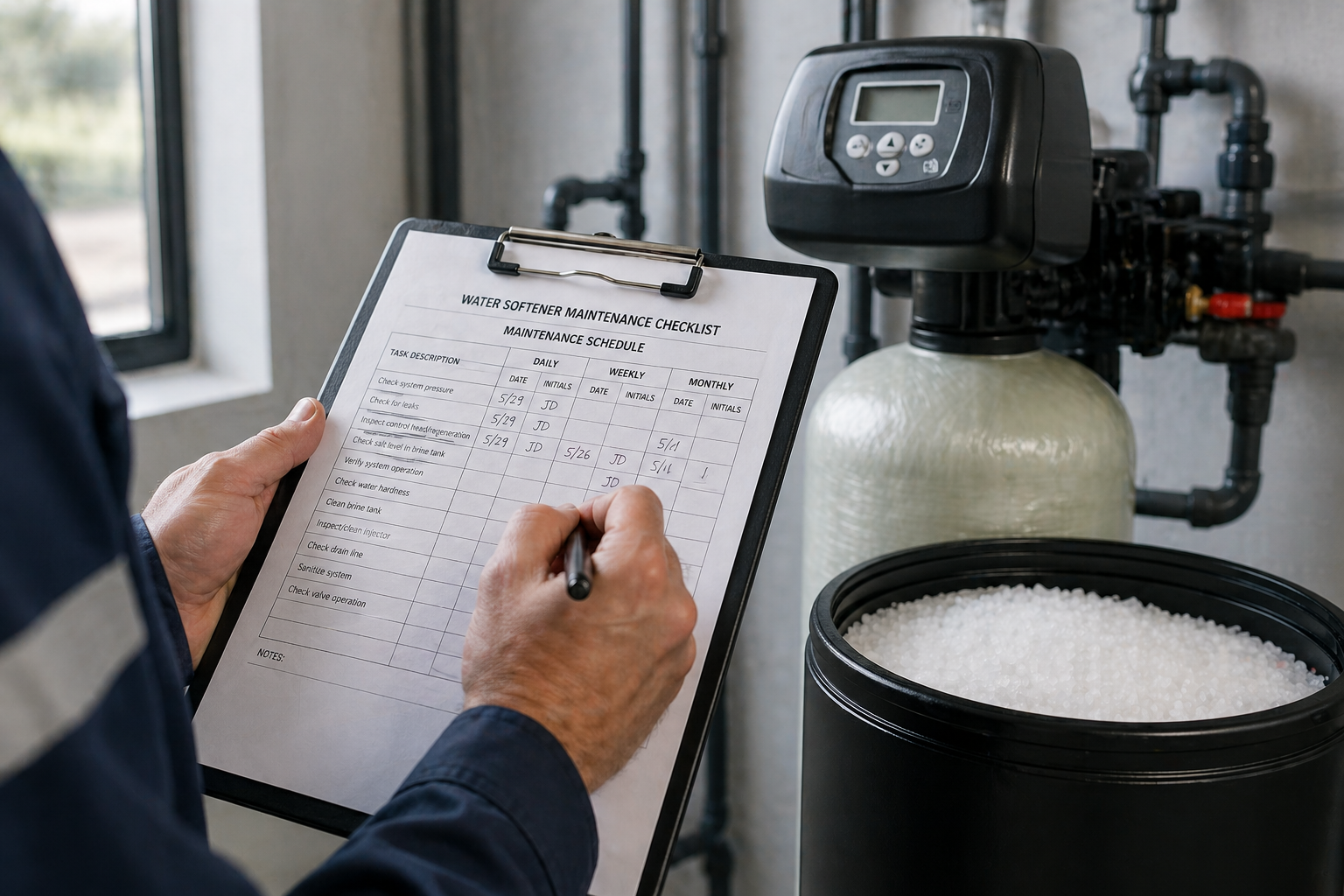
The key system components that should feature in any commercial schedule include water softeners (salt replenishment, resin checks, and regeneration cycle verification), filtration systems (cartridge or media replacements based on throughput volume and water quality, not calendar date alone), reverse osmosis systems (membrane inspection, pre-filter changes, and periodic sanitisation), chemical dosing systems (reagent replenishment, pump calibration, and injection point integrity), UV disinfection units (annual lamp replacement and sleeve cleaning), and water dispensers and point-of-use equipment (filter changes, hygiene checks, and sanitisation at usage-appropriate intervals).
Alongside the physical equipment, the schedule must include water quality testing at defined intervals, covering hardness, Total Dissolved Solids (TDS), pH, chlorine residual, and, where Legionella risk applies, microbiological sampling. Annual system line disinfection and Legionella temperature monitoring are not supplementary activities: they are mandatory components of any compliant commercial water system maintenance programme. Documentation of every task completed is not optional. It creates the audit trail that demonstrates compliance and protects the business in the event of a regulatory inspection, insurance claim, or legal proceedings.
Frequency Breakdown: Daily to Annual Tasks
An effective water treatment maintenance schedule is tiered by frequency, with tasks assigned to the interval most appropriate to their risk level and the consequences of missing them. Research from osapiens confirms that industry best practice organises maintenance activity across five time horizons: daily, weekly, monthly, quarterly, and annual.
Daily checks are brief operational verifications that confirm the system is functioning as expected. These include confirming water softener salt levels are adequate, checking filtration systems are operating within normal pressure parameters, verifying chemical dosing pumps are running and reagent tanks are sufficiently stocked, and noting any visible leaks, alarms, or error indicators. These checks take minutes but create an early warning system that catches developing faults before they become failures.
Weekly inspections go a step further: verifying flow rates, checking bypass valve positions, inspecting connections and fittings for signs of corrosion or weeping, and cleaning accessible equipment surfaces. For systems with digital monitoring, weekly reviews of logged data can reveal gradual trends that indicate a service intervention is approaching.
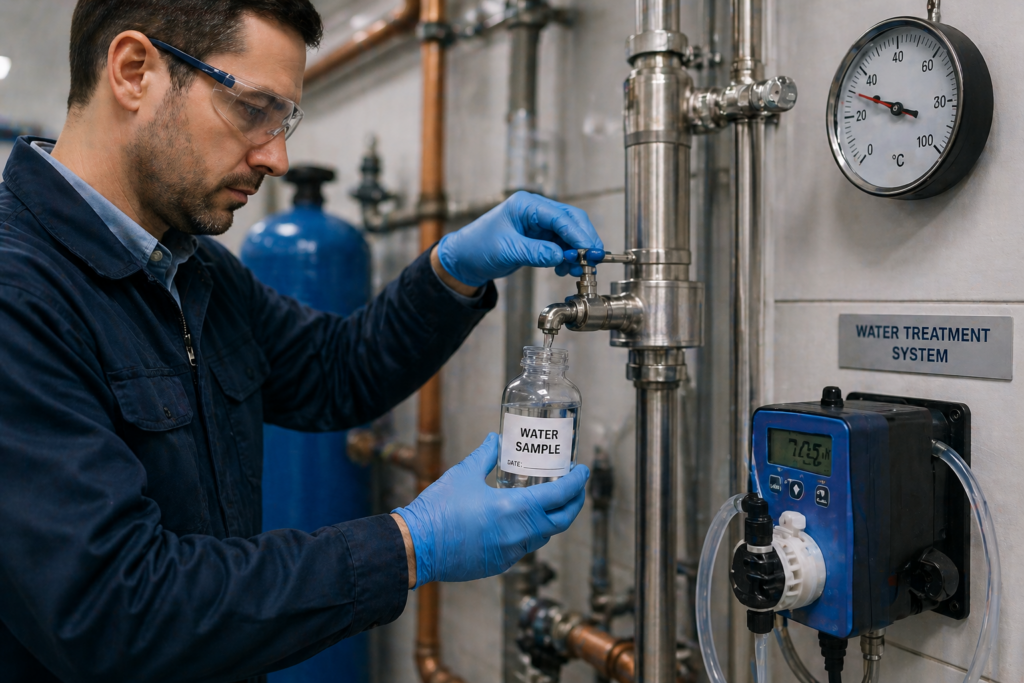
Monthly tasks include water quality sampling and testing, regeneration cycle performance checks for softeners, cartridge filter pressure differential review, dosing pump calibration verification, Legionella sentinel outlet temperature checks, and inventory management for consumables. Monthly sampling provides the quality data that compliance records require and flags any change in incoming water chemistry that might affect treatment performance.
Organisations using preventive maintenance with digital monitoring systems report 18 to 25% reductions in maintenance costs and 30 to 50% decreases in unplanned downtime compared to reactive maintenance approaches. Source: osapiens, Water Treatment Plant Maintenance Checklist.
Quarterly servicing addresses components requiring more intensive attention: chemical feed pump overhauls, valve exercising (to prevent seizure through inactivity), RO membrane performance checks, UV sleeve cleaning, Legionella microbiological sampling from defined sample points, and a full review of the maintenance log to identify recurring issues. For sites with Legionella risk assessments, quarterly tasks include temperature checks at defined sentinel points and a review of any temperature exceedances recorded since the previous visit.
Annual overhauls are the most comprehensive intervention in the schedule. They typically cover full system line disinfection and post-disinfection microbiological testing, RO membrane replacement assessment, softener resin testing, pressure vessel inspection, control panel calibration, UV lamp replacement, dosing programme review against current water chemistry, COSHH assessment update, and a complete review of the Legionella risk assessment. Annual servicing is also the appropriate moment to review the maintenance schedule itself, since water quality and system usage can change over time.
Chemical Dosing: Maintenance, Calibration and COSHH Compliance
Chemical dosing systems are a critical and frequently under-maintained component of commercial water treatment. Where water chemistry requires active management, dosing pumps and associated equipment must be serviced to a rigorous schedule to ensure consistent chemical delivery at the correct rate. A dosing pump that is under-delivering by even 20% will progressively under-treat the system, with no visible indication until corrosion, scale, or biological growth becomes apparent in downstream equipment or water quality results.
The most common chemical dosing applications in UK commercial water treatment include scale inhibitors (polyphosphate or phosphonate-based products) for hard water areas, corrosion inhibitors for closed heating and chilled water circuits, biocides for cooling tower water treatment and Legionella control, pH correction chemicals for reverse osmosis pre-treatment and boiler feedwater conditioning, and sodium hypochlorite for chlorination of storage tanks and distribution systems.
The maintenance schedule for chemical dosing systems should be structured as follows. Daily: verify that each dosing pump is operating (indicator lights active, pump audible), check reagent tank levels against expected consumption, and note any alarms or error codes. A pump that appears to be running but is air-locked or has a blocked injection point will not be delivering chemical to the system. Weekly: check injection rates against calibrated set points and confirm that chemical consumption aligns with expected dosing volumes. Significant deviations in either direction warrant immediate investigation. Monthly: carry out a full pump calibration check against a known volume using a measuring cylinder, inspect injection points and non-return valves for fouling or wear, replenish chemical stocks, and review chemical efficacy data from the monthly water quality test. Quarterly: conduct a full pump head inspection, replace diaphragms and valves where wear is evident, review the dosing programme against current water quality results, and adjust set points where treatment is not meeting target parameters. Annually: carry out a comprehensive review of the entire dosing programme against up-to-date water chemistry data, review chemical supplier technical data sheets for any product updates, and update the site’s Control of Substances Hazardous to Health (COSHH) assessment to reflect any changes in chemicals used, storage arrangements, or personnel handling the substances.
COSHH compliance is a legal requirement under the Control of Substances Hazardous to Health Regulations 2002. All water treatment chemicals on site must be covered by a current COSHH assessment, with appropriate risk controls, personal protective equipment (PPE) requirements, and emergency procedures documented and communicated to anyone who handles or works near them. Secondary containment for chemical storage tanks must be inspected as part of the annual overhaul. Sovereign Water’s Smart Maintenance programme includes COSHH documentation review and chemical handling guidance as a standard element of our annual service visits.
Annual System Line Disinfection and Testing
Annual system line disinfection is a distinct maintenance intervention that goes well beyond routine filter changes and equipment servicing. It involves the chemical disinfection of pipework, storage vessels, and associated infrastructure to eliminate biofilm accumulation, flush accumulated sediment, and reset the microbiological baseline of the water system. For commercial buildings with complex water distribution systems, it is one of the most important compliance activities in the annual maintenance calendar.
The Water Regulations Advisory Scheme (WRAS) and BS EN 806-5 (the British and European Standard for the operation and maintenance of installations for water inside buildings) both provide guidance on disinfection procedures and post-disinfection testing requirements. The standard disinfection process for UK commercial water systems involves introducing a sodium hypochlorite solution at a concentration of 50mg/l free chlorine, ensuring contact with all sections of the system (including all branches and dead legs) for a minimum contact time of one hour, followed by thorough flushing and post-disinfection testing before the system is returned to service.
Annual line disinfection is the baseline requirement, but additional disinfection should be triggered by any of the following conditions: a positive Legionella sample result above the action threshold, significant remedial works on the pipework or storage infrastructure, extended system shutdown of four weeks or more, commissioning of new installations or extensions to an existing system, any unexplained deterioration in microbiological water quality results, or evidence of sediment ingress or cross-contamination.
Post-disinfection water quality testing is not optional and must be completed before the system is returned to service. Testing should confirm that free chlorine residuals have been flushed to acceptable levels (typically below 0.5mg/l at point of use), and microbiological sampling from multiple representative points across the system should confirm that total viable counts and coliform bacteria are within acceptable limits. All samples must be tested by a United Kingdom Accreditation Service (UKAS) accredited laboratory, and results must be retained as part of the site’s water treatment records. Returning a system to service without confirmed post-disinfection test results represents a compliance and public health risk that building owners and operators cannot accept.
Legionella Monitoring, Sampling and L8 Compliance
Legionella monitoring and sampling is a legal obligation for the vast majority of commercial water systems in the UK, not a discretionary maintenance activity. The Health and Safety Executive’s Approved Code of Practice L8 (Legionnaires’ Disease: The Control of Legionella Bacteria in Water Systems) and the supporting HSG274 technical guidance documents establish a comprehensive framework of risk assessment, monitoring, sampling, and record-keeping duties that building owners, employers, and those in control of premises must meet. Failure to comply is a criminal offence under the Health and Safety at Work etc. Act 1974.
The foundation of any Legionella control programme is a current, site-specific Legionella risk assessment. This document must identify all water systems on site, evaluate the conditions within those systems that might support Legionella growth (temperatures between 20°C and 45°C, dead legs, infrequently used outlets, scale, sediment, or biofilm accumulation), and specify the control measures and monitoring frequencies appropriate to the level of risk identified. The risk assessment must be reviewed at least every two years, and immediately following any significant change to the water system, the building use, or the occupant profile.
Temperature monitoring is the primary ongoing Legionella control measure for domestic hot and cold water systems. L8 and HSG274 Part 2 specify the following control parameters. Hot water storage (calorifiers and cylinders): the stored water must reach a minimum of 60°C, at which temperature Legionella bacteria are killed within two minutes. Hot water distribution: water must be delivered at 50°C or above at all sentinel (furthest and least-used) outlets within one minute of running. Cold water storage tanks and distribution pipework: water must be maintained below 20°C throughout, since Legionella can survive and proliferate at temperatures between 20°C and 45°C. Temperature checks at defined sentinel outlets must be carried out monthly and formally recorded. A full system temperature survey covering all outlets (not only sentinels) must be conducted at least annually.
Legionella microbiological sampling provides confirmation that the temperature controls and other measures in place are effective. Sampling frequencies are determined by the risk assessment, but a typical programme for a medium-risk commercial building includes quarterly sampling from a defined set of sample points: cold water storage tanks, hot water calorifiers, sentinel hot and cold outlets, any spray-generating outlets such as showerheads, and any other points identified as higher risk by the risk assessment. Cooling towers and evaporative condensers, where present, typically require monthly microbiological monitoring due to their inherently higher Legionella risk.
All Legionella samples must be tested by a UKAS-accredited laboratory using the ISO 11731 methodology. Results are interpreted against the following thresholds, as set out in HSG274. A result below 100 colony forming units per litre (cfu/l) is satisfactory, provided control measures are in place and being maintained. A result between 100 and 1,000 cfu/l requires a review of the control regime, investigation of possible causes, and consideration of remedial action. A result above 1,000 cfu/l requires immediate remedial action, which will typically include system disinfection, a review of the risk assessment, and notification to the responsible person and, in some cases, the relevant enforcing authority.
Record keeping is as important as the monitoring itself under L8. All Legionella-related records must be retained for a minimum of five years and must be available for inspection by the Health and Safety Executive or local authority environmental health officers on request. Required records include the Legionella risk assessment and its review history, all temperature monitoring results with dates and the identity of the person who carried out the checks, all Legionella sample results and the corresponding UKAS laboratory certificates, disinfection records including concentrations used and contact times, a log of all maintenance carried out on the water system, and documentation of the designated Responsible Person for Legionella control on the site.
Sovereign Water can act as a competent person supporting your Legionella control programme, providing temperature monitoring, microbiological sampling coordination, risk assessment review, and the complete documentation trail required under HSE Approved Code of Practice L8. Contact our team to discuss your site’s requirements.
Smart Maintenance vs Reactive Maintenance
The choice between a proactive water treatment maintenance schedule and a reactive approach has a direct and measurable impact on cost, compliance, and equipment longevity. The evidence consistently favours preventive maintenance by a significant margin.
Reactive maintenance carries costs that extend well beyond the repair itself. When a water softener fails, the hard water it delivers to downstream equipment begins causing scale damage immediately. A dosing pump that has lost calibration and is under-delivering scale inhibitor allows corrosion to progress silently in pipework and heat exchangers, often for months before visible symptoms appear. A Legionella temperature exceedance that goes undetected because no monitoring programme is in place creates liability that no reactive response can undo. The cost of documented preventive maintenance is consistently lower than the combined cost of reactive repairs, compliance failures, and equipment replacement.
Smart Maintenance goes further than conventional preventive maintenance by incorporating real-time monitoring and data-led decision-making. Rather than servicing equipment at fixed calendar intervals regardless of actual condition, Smart Maintenance uses performance data to trigger interventions when they are genuinely needed. A filter approaching capacity is flagged for replacement before it fails. A dosing pump consuming more reagent than expected triggers an investigation. A temperature exceedance at a sentinel outlet generates an immediate alert. This approach optimises both the timing and scope of maintenance interventions, reducing unnecessary service visits whilst ensuring that genuinely critical tasks are never delayed.
How to Build Your Water Treatment Maintenance Schedule
Building an effective water treatment maintenance schedule starts with a thorough understanding of the system you are maintaining. No two commercial water systems are identical: the treatment technologies in place, the incoming water quality, the volume of water processed daily, the downstream equipment being protected, the Legionella risk profile of the building, and the regulatory requirements applicable to the site all shape the maintenance tasks and frequencies that are appropriate.
The recommended starting point is a professional water quality assessment and system survey. This establishes baseline parameters, identifies the specific treatment challenges the system needs to address, confirms whether the existing Legionella risk assessment is current, and identifies any chemical dosing or monitoring gaps. Armed with this data, a treatment specialist can specify the correct maintenance frequencies for every system component based on actual conditions rather than generic guidelines.
The schedule should then be structured around the tiered frequency model described in this guide, with each task assigned a responsible party, a completion timeframe, and a documentation requirement. Escalation criteria must also be defined: the conditions under which an out-of-specification result, a temperature exceedance, or a positive Legionella sample triggers an immediate intervention rather than waiting for the next scheduled visit. For multi-site operations, Sovereign Water manages portfolio-wide water treatment maintenance under a single service agreement, with consistent standards and a single point of contact. Contact our team to discuss your requirements.
How Sovereign Water’s Smart Maintenance Works
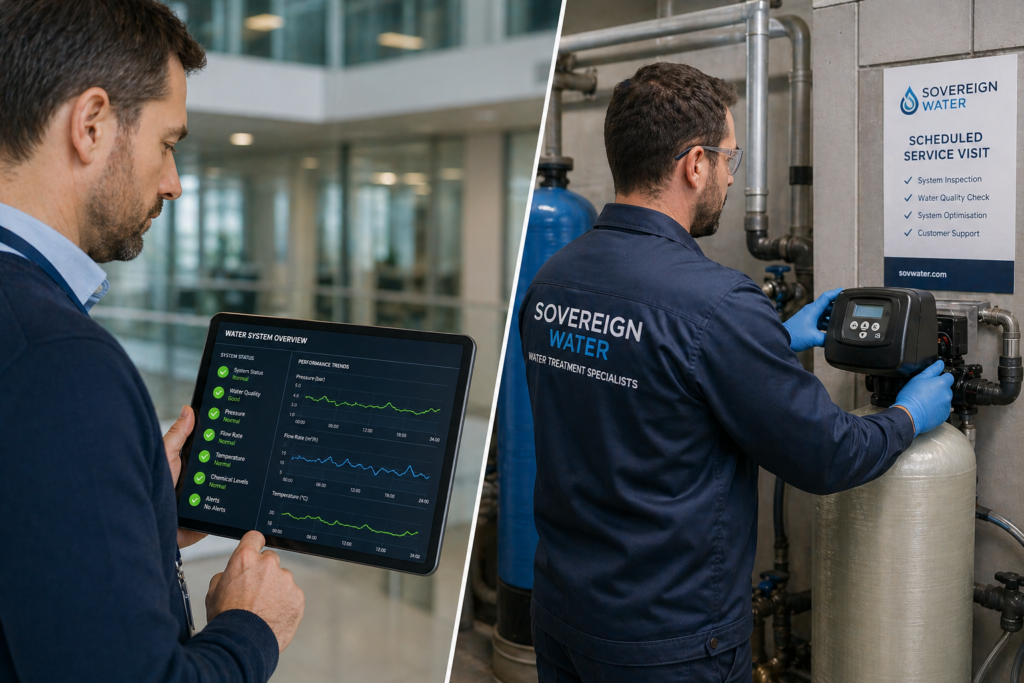
Sovereign Water’s Smart Maintenance programme delivers fully managed water treatment maintenance for commercial clients, removing the burden of schedule management, consumable procurement, compliance documentation, Legionella monitoring, and chemical dosing management from in-house facilities teams. Our approach is built around the tiered maintenance model described in this guide, enhanced by IoT-connected monitoring technology that provides real-time visibility of system performance between service visits.
Every Smart Maintenance contract begins with a free site assessment, during which our technical team surveys the existing water treatment systems, tests incoming water quality, reviews existing maintenance records and risk assessments, and identifies any compliance gaps. From this assessment, we build a bespoke maintenance schedule integrating all elements: equipment servicing, chemical dosing calibration and COSHH documentation, Legionella temperature monitoring and sampling coordination, annual line disinfection and post-disinfection testing, water quality reporting, and responsive technical support.
The result for facilities managers is complete clarity: a single, professionally managed programme that satisfies all regulatory requirements and protects equipment investment, with a documented audit trail available at any time. To find out how our Smart Maintenance programme can be structured for your site or portfolio, speak to our team today.
Frequently Asked Questions
How often should a commercial water treatment system be serviced?
Most commercial systems require daily operational checks, monthly water quality testing and Legionella temperature monitoring, quarterly equipment servicing and microbiological sampling, and a full annual overhaul including system line disinfection. Exact frequencies depend on water chemistry, throughput, and the specific equipment and risk profile of the site. A professional water quality assessment is the most reliable starting point.
What are the legal requirements for Legionella monitoring in commercial buildings?
Under HSE Approved Code of Practice L8, building owners and those in control of premises must carry out a Legionella risk assessment, implement control measures, conduct monthly temperature checks at sentinel outlets, arrange risk-based microbiological sampling (typically quarterly), carry out annual line disinfection, and retain records for five years. Non-compliance is a criminal offence under the Health and Safety at Work etc. Act 1974.
How often should chemical dosing pumps be calibrated?
Dosing pumps should be verified daily for operation, checked weekly against set-point output, and formally calibrated monthly against a known volume. Quarterly pump head inspections and diaphragm checks are recommended, along with an annual full programme review against current water chemistry data and a COSHH assessment update. Deviations from expected chemical consumption should trigger immediate investigation.
What does annual system line disinfection involve?
Annual line disinfection involves introducing a sodium hypochlorite solution at 50mg/l free chlorine through all sections of the water distribution system, maintaining contact for at least one hour, then flushing and conducting post-disinfection microbiological testing from multiple points before returning the system to service. All samples must be tested by a UKAS-accredited laboratory and results retained in site records.
What is the difference between preventive and reactive water treatment maintenance?
Preventive maintenance follows a documented schedule to service equipment and monitor water quality before problems occur. Reactive maintenance addresses failures after they happen. Preventive approaches consistently deliver lower overall costs, better compliance outcomes, and longer equipment life. Research indicates preventive maintenance reduces unplanned downtime by 30 to 50% and cuts costs by 18 to 25% compared to reactive approaches.
How does Sovereign Water help businesses manage water treatment compliance?
Sovereign Water provides fully managed Smart Maintenance contracts covering all scheduled servicing, chemical dosing management, Legionella temperature monitoring, microbiological sampling coordination, annual line disinfection, and complete compliance documentation. We handle the entire programme on the client’s behalf, providing a single point of contact and a complete audit trail across single or multiple sites.
Ready to Put a Proper Maintenance Schedule in Place?
Sovereign Water builds and manages bespoke water treatment maintenance schedules for commercial businesses across the UK. From free site assessments to fully managed Smart Maintenance contracts covering chemical dosing, Legionella monitoring, annual disinfection, and compliance documentation, we take the complexity out of water system management.