
5 Ways Poor Water Quality Damages Your Coffee Machine
Hard water damages coffee machines by causing limescale buildup on heating elements, blocking internal components, creating inconsistent brewing temperatures, increasing maintenance costs, and shortening machine lifespan. Using a water filtration system that targets the right mineral balance is the most effective way to protect your equipment.
Water is not just an ingredient in your morning cup of coffee. It is the foundation of every brew. In fact, water makes up approximately 98% of brewed coffee, meaning the quality of your water has a direct and measurable impact on both the taste in your cup and the health of your machine. Yet water quality is one of the most overlooked factors in coffee preparation, both at home and in commercial settings.
Poor water quality, particularly water with high mineral content, is one of the leading causes of premature coffee machine failure. From blocked components to inconsistent brewing temperatures, the damage builds gradually and often goes unnoticed until it becomes costly. Understanding how water quality affects your equipment is the first step toward protecting your investment and improving the quality of every cup you serve.
If you have ever asked whether hard water can damage a coffee machine, the answer is yes. Here are five specific ways poor water quality damages your coffee machine, and what you can do about it.
Table of Contents
- 1. Hard Water Limescale Buildup Reduces Heating Efficiency
- 2. Blocked Components Restrict Water Flow
- 3. Inconsistent Brewing Temperatures Affect Every Cup
- 4. Increased Maintenance Costs and Shortened Machine Lifespan
- 5. Corrosion from Overly Soft or Aggressive Water
- What Is the Best Water for Your Coffee Machine? TDS and Evolving Standards
- The Sovereign Water Perspective
- Frequently Asked Questions
- How to Prevent Limescale and Protect Your Coffee Machine
1. Hard Water Limescale Buildup Reduces Heating Efficiency
Limescale forms when calcium and magnesium in hard water are heated, coating heating elements and boiler walls with a hard mineral deposit that reduces efficiency and increases energy consumption.
Hard water contains elevated levels of dissolved minerals, primarily calcium and magnesium. When hard water is heated inside your coffee machine, these minerals precipitate out of solution and form a hard, chalky deposit known as limescale. Over time, this limescale accumulates on heating elements, boiler walls, and internal tubing.
The result is a heating element that has to work significantly harder to reach the same temperature. This not only increases energy consumption but also places ongoing mechanical stress on the heating system. As Union Place Coffee Roasters notes, “Hard water can cause scale buildup in kettles, boilers, and coffee machines. Regular descaling and using filtered water can extend the life of your gear.”
In practical terms, a machine that once reached brewing temperature in seconds may begin to lag, drawing more power and delivering less consistent results. Left unaddressed, this inefficiency accelerates wear on the heating element and can lead to complete component failure.
2. Blocked Components Restrict Water Flow
Limescale does not only affect heating elements. It accumulates throughout the internal pathways of your coffee machine, including pipes, valves, group heads, and steam wands. As these deposits build up, they narrow the channels through which water flows, restricting pressure and reducing the volume of water that can pass through at any given time.
For espresso machines, consistent water pressure is critical to proper extraction. A blocked group head or partially obstructed valve means the water cannot flow through the coffee grounds at the correct rate or pressure. This leads to uneven extraction, weak or bitter flavors, and unpredictable results from one shot to the next.
In commercial environments where machines operate continuously throughout the day, this type of blockage can develop faster and cause more significant. Technician callouts, replacement parts, and machine downtime all carry real financial costs that could be avoided with proper water treatment from the outset.
3. Inconsistent Brewing Temperatures Affect Every Cup
Brewing temperature is one of the most important variables in coffee extraction. The Specialty Coffee Association recommends specific temperature ranges to achieve optimal flavor, and even small deviations can result in under-extracted or over-extracted coffee. When limescale insulates the heating element or restricts water flow through the boiler, the machine struggles to maintain a stable and accurate temperature.
This inconsistency is particularly damaging in high-volume settings such as cafes, restaurants, and office kitchens. Customers or staff may notice that the coffee tastes different from one hour to the next, or that the machine takes longer to recover between brews. These are signs that the internal components are no longer performing as designed, and water quality is frequently the root cause.
The Specialty Coffee Association recommends a Total Dissolved Solids (TDS) range of 75 to 250 ppm for optimal coffee brewing. Water below 50 ppm is not only associated with poor flavor extraction but can also cause corrosion in metal components, creating a different but equally damaging problem. Striking the right mineral balance is essential for both machine health and cup quality.
4. Increased Maintenance Costs and Shortened Machine Lifespan
The cumulative effect of limescale buildup, blocked components, and thermal stress is a machine that requires more frequent servicing and reaches the end of its useful life sooner than it should. Descaling treatments, replacement parts, and professional maintenance visits all add up, particularly for businesses that rely on their coffee equipment daily.
Research from water treatment specialists confirms that hard water causes limescale buildup leading to reduced heating efficiency, blocked components, inconsistent brewing temperatures, increased maintenance costs, and shorter machine lifespan. These are not isolated issues. They are interconnected consequences of the same underlying problem: water that has not been properly treated before entering the machine.
For commercial operators, the financial case for investing in water filtration is straightforward. A quality water filter for your espresso machine or brewer costs a fraction of what repeated service calls and early machine replacement will cost over the same period. For residential users, the same logic applies. A well-maintained machine that receives properly filtered water will consistently outperform and outlast one that does not.
5. Corrosion from Overly Soft or Aggressive Water
Water with Total Dissolved Solids (TDS) below 50 ppm lacks the mineral content to protect metal components, causing corrosion in copper pipes, brass fittings, and stainless steel boilers. Reverse osmosis with controlled remineralisation solves this.
While hard water and limescale are the most commonly discussed threats to coffee machines, water that is too soft or too pure presents its own risks. Water with a TDS below 50 ppm is considered aggressive, as noted in World Health Organisation guidelines on drinking water quality. It lacks the mineral content that provides a natural buffer, making it more likely to leach metals from internal components such as copper pipes, brass fittings, and stainless steel boilers.
This corrosion is less visible than limescale but can be equally damaging over time. It compromises the structural integrity of internal components and can introduce metallic flavors into the coffee itself. This is why simply removing all minerals from water through reverse osmosis is not a complete solution on its own.
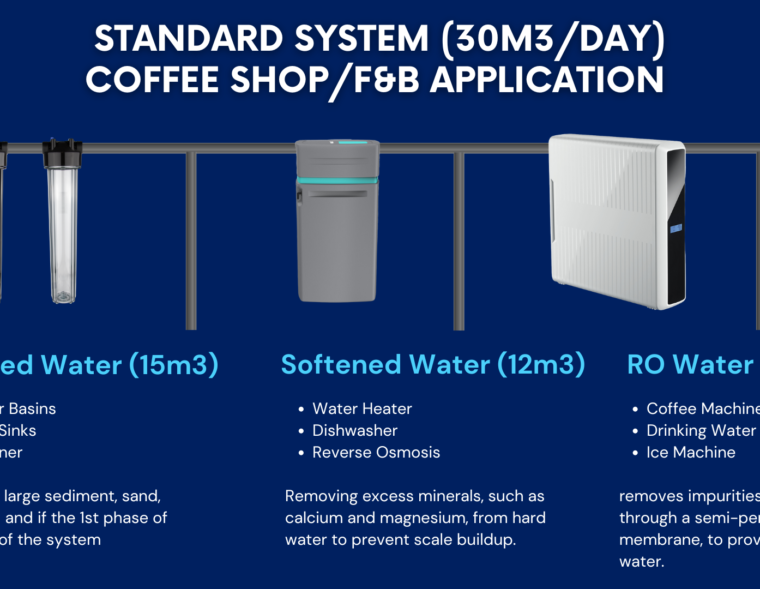
Prepared water using reverse osmosis followed by controlled remineralization offers a more balanced approach. This method removes the hardness minerals responsible for limescale while reintroducing the right level of minerals to protect components and support proper extraction. As noted by water treatment specialists, prepared water from reverse osmosis removes hardness minerals, preventing limescale without damaging machines mechanically, provided the remineralization step is included.
What Is the Best Water for Your Coffee Machine? TDS and Evolving Standards
For many years, coffee professionals followed a simple set of rules for water quality. A TDS of around 150 ppm with specific ratios of general hardness to carbonate hardness was considered the gold standard. However, as of 2026, these traditional rules are being reassessed. Research and practical experience have shown that the relationship between water chemistry and coffee quality is more nuanced than older guidelines suggested.
The SCA continues to recommend a TDS range of 75 to 250 ppm, but the emphasis is increasingly on understanding the specific mineral composition of your water source rather than relying on a single number. Testing your water, understanding what is in it, and treating it accordingly is now considered best practice for both machine longevity and coffee quality.
This means that a one-size-fits-all approach to water treatment is no longer sufficient. Different water sources require different treatment strategies, and the right solution for a cafe in a hard water region will differ from the right solution for a home machine connected to a soft water supply.
The Sovereign Water Perspective
At Sovereign Water, we work with residential customers, commercial operators, and food service businesses to address exactly these kinds of challenges. Water quality is not a secondary consideration. It is central to the performance and longevity of any equipment that relies on water, including coffee machines.
Our water treatment and filtration systems are designed to deliver water within the optimal TDS range recommended by the SCA, removing the hardness minerals that cause limescale while preserving the mineral balance that supports proper extraction and protects internal components. Whether you operate a single espresso machine or a fleet of commercial brewers, the right water treatment solution can reduce maintenance costs, extend equipment life, and improve the consistency of every cup.
We believe that protecting your equipment starts with understanding your water. That is why we offer water testing and tailored filtration recommendations as part of our service to every customer.
Frequently Asked Questions
How do I know if my water is too hard for my coffee machine?
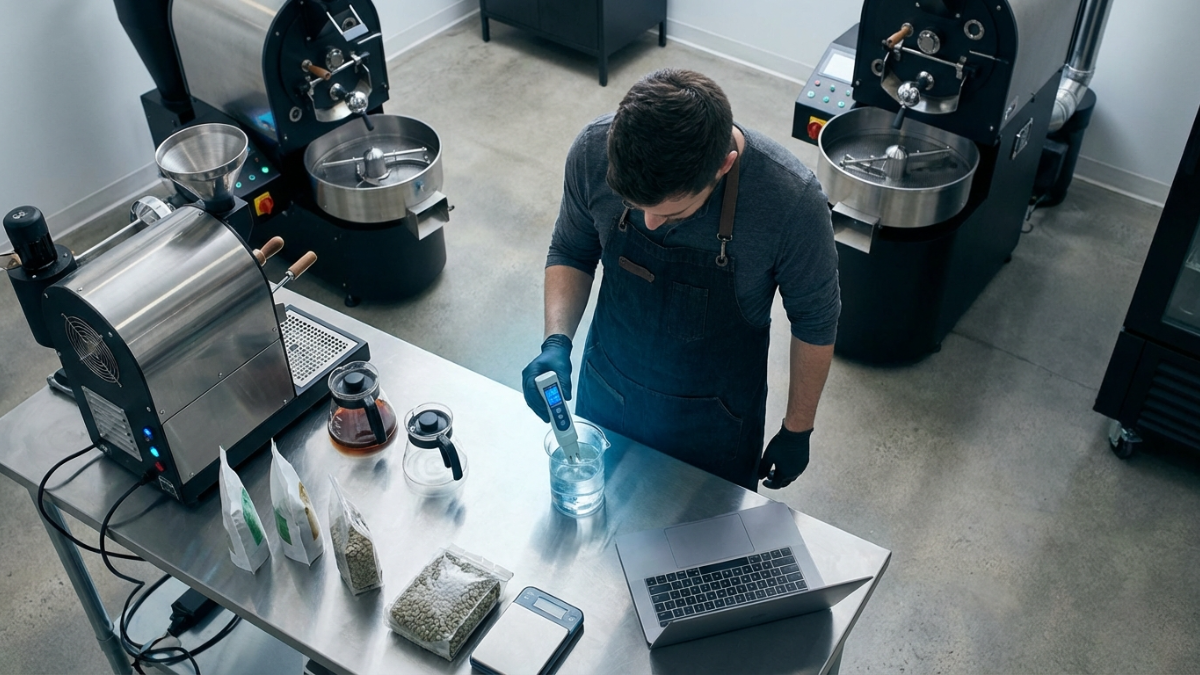
The most reliable way is a water test or TDS meter. Warning signs include white chalky deposits around taps, a film on hot drinks, or a machine that takes longer to heat up. If your water exceeds the Specialty Coffee Association’s recommended range of 75 to 250 ppm TDS, a filtration system is worth considering.
Is reverse osmosis water safe to use in a coffee machine?
Reverse osmosis (RO) water on its own is not ideal because it removes virtually all minerals, dropping TDS well below 50 ppm. This can cause corrosion and sour-tasting coffee. However, RO combined with a remineralisation stage is an effective solution, removing hardness minerals while reintroducing enough minerals to protect the machine and support proper extraction.
How often should I descale my coffee machine if I use filtered water?
With a correctly sized and maintained filtration system keeping your water within the recommended TDS range, you will need descaling far less frequently than with untreated tap water. Follow the manufacturer’s descaling schedule and arrange periodic water quality checks to ensure your filter continues performing as intended.
How to Prevent Limescale and Protect Your Coffee Machine
The connection between water quality and coffee machine performance is clear. Limescale buildup, blocked components, inconsistent temperatures, accelerated wear, and corrosion are all preventable consequences of using water that has not been properly treated. With the right filtration solution in place, you can extend the life of your equipment, reduce maintenance costs, and deliver a consistently better cup of coffee.
- Test your water to understand what you are working with before choosing a treatment solution.
- Aim for a TDS of 75 to 250 ppm as recommended by the Specialty Coffee Association.
- Avoid both extremes: water that is too hard causes limescale, while water that is too soft can cause corrosion.
- Consider reverse osmosis with remineralization for a balanced and controlled water quality solution.
- Maintain your filtration system regularly to ensure it continues to protect your equipment.
Sovereign Water is here to help you find the right solution for your specific water quality challenges. Contact our team today to arrange a water test and receive a tailored recommendation for your home or business.