
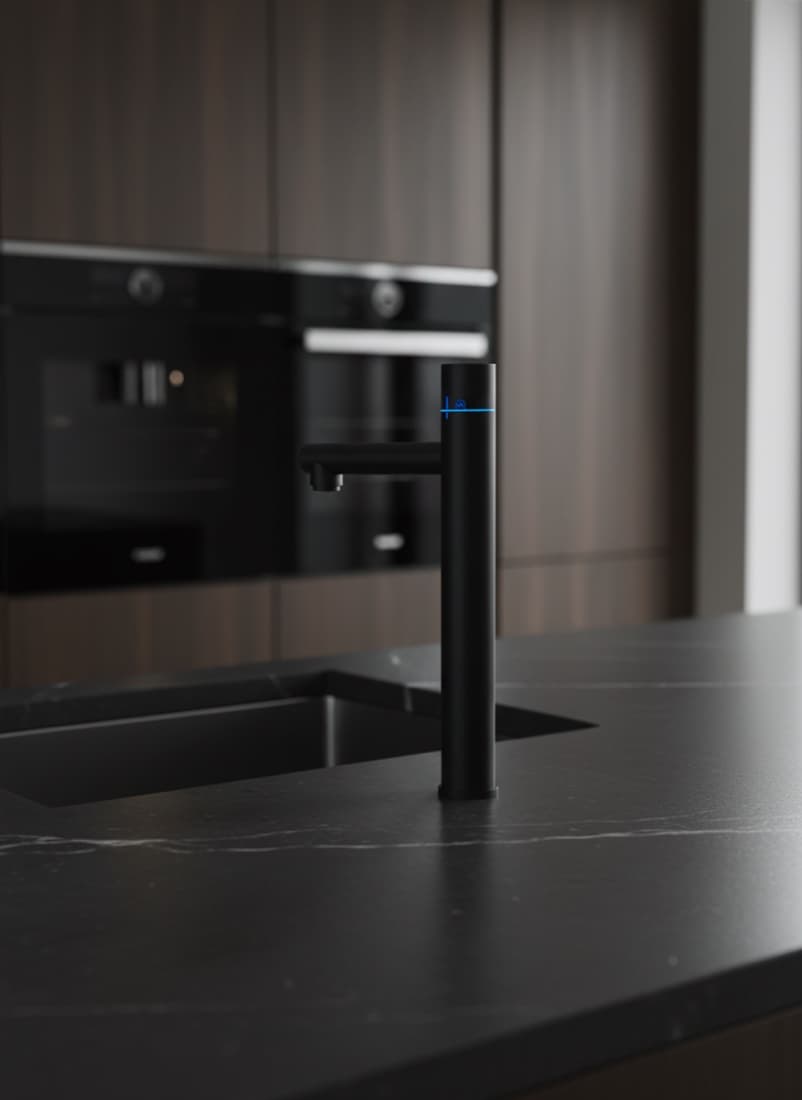
The instant boiling water tap vs kettle office debate comes down to a simple operational question: how much time, energy, and money does your workplace lose every day to the humble kettle? For a small team the answer is modest, but across a busy commercial floor the cumulative cost of waiting, reboiling, and overfilling adds up quickly. Sovereign Water has specified, installed and maintained instant boiling water taps and full hydration systems across UK offices, hotels and corporate campuses, which gives us a practical, evidence-led view of when a tap genuinely pays for itself and when a kettle is still the sensible choice.
This guide compares the two options across the factors that actually matter to a commercial buyer: energy use, total cost of ownership, time and productivity, safety, and hygiene. We will be honest about the upfront investment and the usage threshold at which a tap starts to save money, rather than overselling. If you would like a tailored recommendation for your floor, our team offers a free water quality assessment and consultation before any commitment.
TL;DR
- An instant boiling water tap uses up to 50% less energy than a traditional kettle, holding water at temperature on roughly 10 watts rather than drawing 2 to 3 kilowatts per boil.
- Taps cost more upfront (typically £800 to £1,100) but recover the difference through reduced energy waste and eliminated waiting time in higher-usage offices.
- A tap becomes cost-effective once your office boils water more than around four times a day, with annual savings of roughly £25 to £57 depending on usage and overfilling habits.
- Taps are safer and more hygienic in shared spaces, with anti-scald controls and no hot vessel to carry across a busy kitchen.
- Sovereign Water offers a free site assessment to calculate the right specification and a transparent total cost of ownership for your team.
Instant Boiling Water Tap vs Kettle Office: The Quick Verdict
For most offices with more than a handful of regular hot-drink makers, an instant boiling water tap is the better long-term choice on energy, time and safety, while a kettle remains the lower-risk option only for very small teams or short-lease spaces. The deciding factor is usage frequency: the more often water is boiled across the day, the stronger the case for a tap becomes.
A traditional kettle is cheap to buy and needs no installation, which is why it remains the default in small workplaces. The problem is what happens after purchase. Kettles are routinely overfilled, reboiled, and left to create queues at peak times, and each of those habits wastes energy and staff time. An instant boiling water tap addresses all three by holding a reserve of water at 98 to 100 degrees Celsius, ready on demand, drawn from a compact insulated tank under the counter. The trade-off is a higher upfront investment and the need for professional installation, both of which we cover in detail below.
Energy Efficiency Compared
An instant boiling water tap uses up to 50% less energy than a traditional kettle because it maintains water at temperature on around 10 watts of standby power rather than drawing 2,000 to 3,000 watts for every fresh boil. Over a working day in which a kettle is filled and reboiled many times, that difference in draw translates into a meaningful reduction in electricity consumption.
The core inefficiency of the kettle is reboiling and overfilling. Staff frequently boil far more water than they need, then reboil it later when it has cooled, paying the full energy cost each time. A boiling water tap removes this waste by keeping only a small, insulated volume hot and topping it up incrementally as water is drawn. Boiling a full kettle costs roughly 7p at typical UK electricity rates, whereas an average boiling tap runs at around 3p per day in a household setting, with commercial savings scaling up with the number of users.
"Boiling water taps can use up to 50% less energy than traditional kettles, making them an increasingly attractive option as energy costs remain high." (D.D. Wilson, boiling water tap guide)
For offices with sustainability or environmental, social and governance (ESG) reporting commitments, reduced energy consumption is also a reportable efficiency gain. Pairing a tap with a managed filtration programme keeps that efficiency consistent over the system's life, which is where our Comprehensive Maintenance programmes add value.
Cost and Total Cost of Ownership
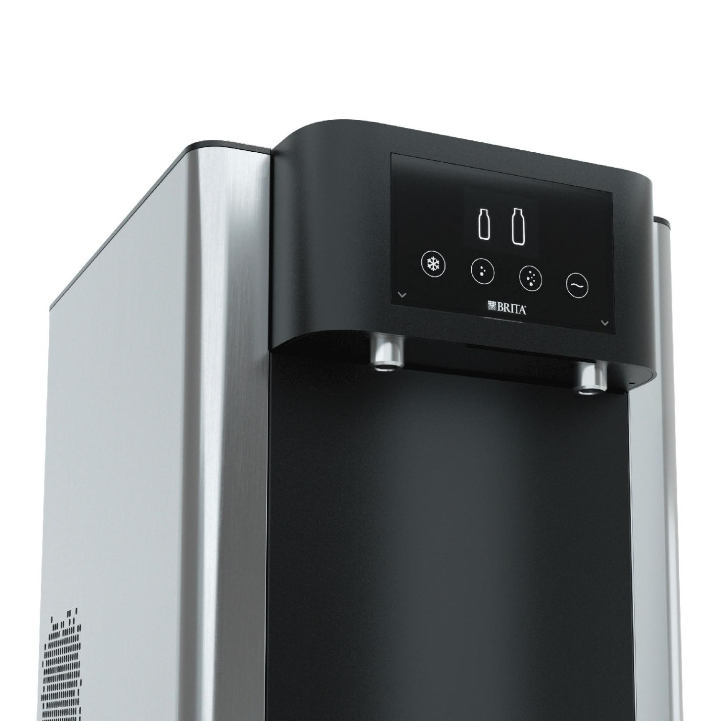
The instant boiling water tap vs kettle office comparison only makes sense when you look at total cost of ownership rather than purchase price alone. A commercial kettle costs £80 to £100, while an instant boiling water tap typically costs £800 to £1,100 before installation, so the kettle wins decisively on day one. The picture changes over the months that follow.
A typical overfilled kettle can cost around £58.40 a year to run, whereas a boiling water tap costs only £11 to £15 a year in average usage. For a conservative office estimate of four cups a day the annual saving sits at roughly £25 to £30, and accounting for realistic overfilling habits that saving rises to £45 to £57 a year. Those figures are running costs only, and the productivity savings from eliminated waiting time, covered in the next section, are typically larger still.
Total cost of ownership also includes consumables and maintenance. A boiling water tap requires a periodic filter cartridge change and an occasional sanitisation visit, both of which are predictable and can be managed proactively. A kettle has no service cost but a short replacement cycle and no equipment protection, leaving downstream appliances exposed to scale in hard-water regions. According to the BRITA boiling water tap comparison, the long-term running-cost advantage of a tap is most pronounced in higher-usage settings, which describes most commercial offices.
Time, Productivity and Convenience
An instant boiling water tap delivers water immediately, removing the two to three minute wait a kettle requires for each boil and the queuing that builds up at busy periods. Across a full team making multiple drinks a day, that reclaimed time is the single largest hidden cost of sticking with kettles.
Consider the workflow. With a kettle, a staff member fills it, waits for it to boil, and often waits again behind colleagues during the mid-morning and post-lunch peaks. With a tap, hot water is drawn on demand and the next person follows immediately. The result is less clutter on the counter, no jostling at a single kettle, and a smoother flow through the kitchen area. For offices that have consolidated onto a single all-in-one tap delivering boiling, chilled and sparkling water, the kettle, the cooler and the bottled water deliveries all disappear at once.
"The primary benefit of having a boiling water tap installed is that it saves you time spent waiting for your kettle to boil." (Hanstrom)
Safety in a Shared Office
An instant boiling water tap is safer than a kettle in a shared office because it removes the need to carry a vessel of boiling water and incorporates anti-scald controls at the point of dispense. In a communal kitchen used by dozens of people, eliminating the moving hot kettle is a genuine reduction in scald risk.
Kettles introduce hazards that are easy to overlook: a full, heavy vessel of just-boiled water carried across a busy space, trailing flexes, and spouts that can spit. A fixed boiling water tap keeps the hot water at one secured point. Leading models include child-lock or push-and-hold activation, insulated spouts, and controlled flow to prevent splashing, which makes them appropriate for environments with a wide range of users and varying levels of care. For facilities managers responsible for workplace safety, that controlled, single-point dispense is straightforward to risk-assess.
Hygiene and Water Quality
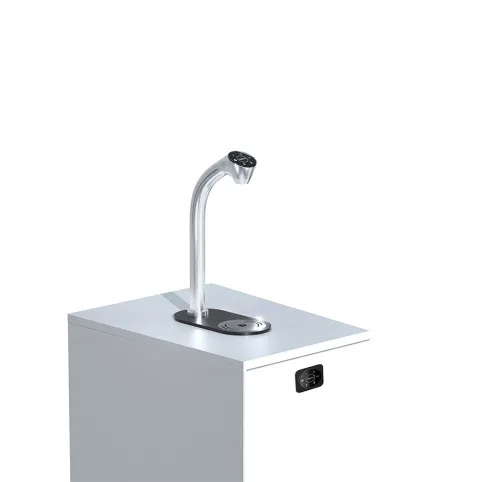
A filtered instant boiling water tap delivers more consistent water quality than a kettle because every draw passes through dedicated filtration, whereas a kettle simply reboils whatever is poured into it and accumulates limescale over time. In hard-water areas this difference is noticeable in both taste and appliance longevity.
Kettles in hard-water regions such as London, the South East and the East of England scale up quickly, and that scale ends up in drinks unless the kettle is descaled regularly. A mains-fed boiling water tap filters out chlorine taste and odour, reduces sediment, and limits scale before it reaches the boiler tank. For offices in regions with particularly challenging incoming water, the correct specification may include bespoke pre-treatment upstream of the tap to protect the boiler and preserve taste, which is something we assess on site rather than assuming a one-size-fits-all cartridge will suffice. The result is cleaner-tasting hot drinks and a system engineered to last.
When Does a Tap Make Sense?
An instant boiling water tap becomes the cost-effective choice once an office boils water more than around four times a day, with the saving growing as usage rises. Below that threshold a kettle is hard to beat on pure economics, so honest specification matters more than a blanket recommendation.
The practical decision rests on team size and behaviour. A two or three person office that boils a kettle twice a day will struggle to justify the upfront investment, and we will say so. A team of fifteen or more, with regular hot-drink rounds, peak-time queues and a habit of overfilling, will recover the cost through energy and time savings and gain the safety and hygiene benefits on top. Short-lease or temporary spaces, or floors where a mains and waste connection is genuinely impractical, are the other cases where a kettle or a bottled solution remains sensible. The right answer is the fit-for-purpose one, which is exactly what a site assessment establishes.
For offices boiling water more than four times daily, a tap can deliver annual savings of roughly £45 to £57 once typical kettle overfilling is taken into account. (D.D. Wilson, boiling water tap guide)
How Sovereign Water Supplies and Maintains Your Tap
Sovereign Water supplies, installs and maintains instant boiling water taps across the UK, handling everything from the pre-installation survey to ongoing filter and sanitisation service through a single point of contact. We specify the right unit for your team rather than the most expensive one, and we are transparent about total cost of ownership before you commit.
Our engineers carry out a survey to confirm the cold water supply, waste drainage and electrical connection are in place and correctly positioned, preventing costly remedial work on installation day. Once the tap is commissioned, our Comprehensive Maintenance programme schedules filter cartridge changes based on actual consumption rather than fixed calendar dates, which keeps water quality consistent and avoids both under-servicing and over-servicing. For multi-site businesses, a single contract across every location simplifies procurement and compliance reporting. We also supply our own RoyalFlow range and premium partner systems, so the recommendation is always matched to your floor, your usage and your budget.
Frequently Asked Questions
Is an instant boiling water tap cheaper to run than a kettle in an office?

Yes, in most offices. A boiling water tap costs roughly £11 to £15 a year to run versus about £58 for a typically overfilled kettle. Annual savings of £25 to £57 are realistic, with the gap widening the more often your team boils water during the day.
How much does an instant boiling water tap cost to install?
The tap itself typically costs £800 to £1,100, plus installation. Installation requires a cold water connection, waste drainage and an electrical supply. Sovereign Water carries out a pre-installation survey to confirm these are available, so the final cost is clear before any work starts.
At what point is a boiling water tap worth it for an office?
A tap becomes cost-effective once your office boils water more than around four times a day. Larger teams with regular hot-drink rounds and peak-time queues recover the upfront cost through energy and time savings, while very small teams may still find a kettle more economical.
Are boiling water taps safe for a shared office kitchen?
Yes. Boiling water taps include anti-scald controls, child-lock or push-and-hold activation and insulated spouts, and they remove the need to carry a hot kettle across a busy kitchen. This makes them straightforward to risk-assess for communal commercial spaces.
Do boiling water taps need filtration and servicing?
Yes. A mains-fed tap filters chlorine, sediment and scale before water reaches the boiler, and the filter needs periodic replacement. Sovereign Water manages this through a Comprehensive Maintenance programme that schedules changes based on actual usage, keeping water quality and efficiency consistent.
Ready to Replace the Office Kettle?
Sovereign Water supplies, installs and maintains instant boiling water taps across the UK, with a free site assessment and a transparent total cost of ownership so you can decide with confidence. Get a free consultation.