
When it comes to brewing the perfect cup of coffee, many people focus on the quality of the beans, grind size, or the brewing method itself. But often overlooked is one of the most critical components: water quality. Given that a cup of coffee is almost entirely water, the quality of water used can significantly influence the flavour, consistency, and even the longevity of your equipment. Let’s explore why water quality is crucial and how the right water treatment solutions can make all the difference for your coffee.

1. How Water Quality Affects Coffee Flavour
Water is the medium that extracts flavours from coffee grounds, and its quality directly affects the extraction process. Minerals and impurities in the water can either enhance or distort the flavours, depending on the water’s composition. Here are key components that impact coffee flavour:
- Hardness: Water hardness refers to the concentration of minerals like calcium and magnesium. A moderate amount of hardness helps extraction and body. Too much hardness, especially combined with high alkalinity, can make coffee taste flat or chalky and builds scale in the machine. The Specialty Coffee Association (SCA) targets calcium hardness of about 68 mg/L, within a range of 17 to 85 mg/L.
- Chlorine: Chlorine is often present in municipal water supplies and can leave a chemical aftertaste in coffee. Removing chlorine through filtration is crucial for a clean flavour.
- Total Dissolved Solids (TDS): TDS refers to the concentration of dissolved minerals and salts in water. The SCA's water quality guidance targets a TDS of about 150 mg/L, with an acceptable range of 75 to 250 mg/L, for balanced extraction.
2. Why Reverse Osmosis (RO) is the Best Solution for Coffee
For coffee shops and businesses looking to serve consistently great-tasting coffee, Reverse Osmosis (RO) is one of the most reliable and effective water treatment methods. RO systems remove most impurities, including heavy metals, chlorine, and excessive minerals. On its own, RO water is too low in minerals for good coffee, so it needs blending or remineralisation to bring it back into the right range.
What sets Sovereign Water’s RO systems apart is their adjustable blending capability, which allows clients to fine-tune TDS levels to achieve their desired coffee profile. By adjusting the blend, you can bring the water into the recommended TDS range and suit your coffee’s flavour.
For advanced coffee applications, remineralisation cartridges can also be added to the system, further enhancing the taste profile by reintroducing specific minerals after filtration. As coffee can often be the primary revenue source for many cafes and restaurants, having complete control over the water quality is crucial. Whether your business is in an area with poor water quality or you simply want to optimise your brew, investing in the right system can be the key to success.
Think about it this way: You wouldn’t put diesel in a Ferrari, so why compromise on the water quality for your coffee?

3. The Impact on Equipment Maintenance
Beyond flavour, the quality of water plays a significant role in the health and longevity of coffee-making equipment. Hard water, in particular, can lead to scale buildup in espresso machines, boilers, and brewers. This not only diminishes performance but also leads to higher energy costs and frequent repairs.
By installing an RO system or water softener, you can prevent scale accumulation, keeping your equipment running smoothly and reducing the need for costly maintenance. Proper water treatment helps extend the life of your machines, ensuring they operate at peak performance day in and day out.

4. Ensuring Consistency Across Multiple Locations
For businesses with multiple locations, maintaining consistent water quality is vital. Regional water supplies can vary dramatically, leading to inconsistent coffee flavours across stores. Testing the incoming water at each site, specifying treatment to suit it, and keeping every system on a planned maintenance schedule helps deliver a uniform experience across all locations, whether in Riyadh or London.
The Correct Coffee Shop System

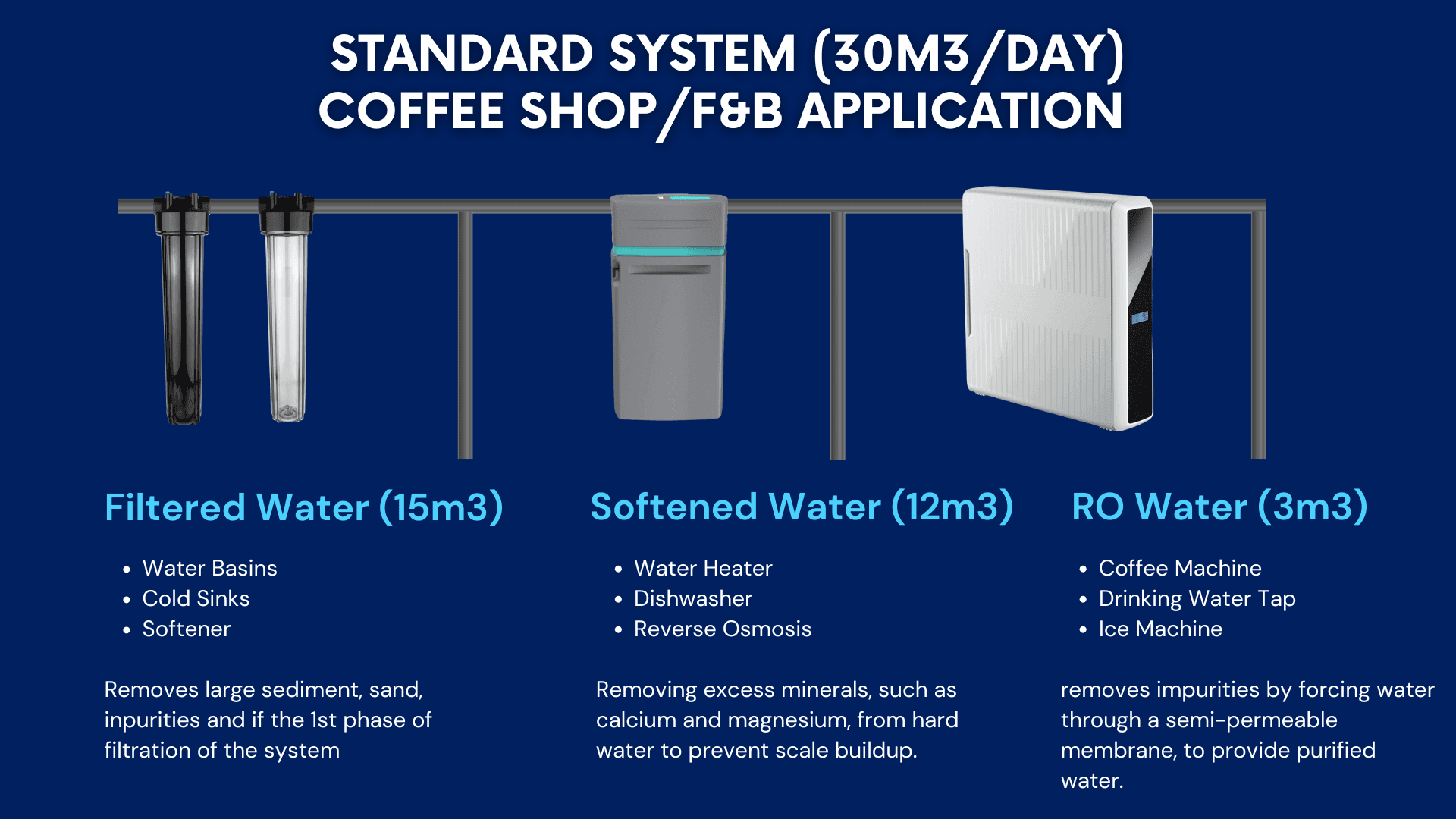
The Standard Water Filtration System depicted in the image is designed specifically for coffee shops and F&B applications, offering a 30m³/day capacity. The system is split into three key stages, each serving a crucial role in maintaining water quality and ensuring the performance and longevity of kitchen equipment.
- Filtered Water (15m³/day):
- Application: Used for water basins, cold sinks, and as the pre-treatment for the water softener.
- Purpose: This stage removes large particles, sediments, and impurities from the water, such as sand and rust. It is critical to filter out these elements before they reach sensitive kitchen equipment, preventing clogs and damage.
- Product: Regent Filter Housings and Cartridges from Sovereign Water are ideal for this stage, ensuring optimal sediment filtration.
- Softened Water (12m³/day):
- Application: Used for water heaters, dishwashers, and as pre-treatment for the reverse osmosis system.
- Purpose: The softening stage eliminates excess calcium and magnesium that cause hardness in water. Softened water is crucial to prevent limescale buildup in heaters and dishwashers, which can reduce efficiency and lead to frequent breakdowns.
- Product: The Regal 250 Water Softener is perfect for this step, offering efficient softening for medium-sized commercial applications.
- RO Water (3m³/day):
- Application: Used for coffee machines, drinking water taps, and ice machines.
- Purpose: Reverse Osmosis (RO) is used to provide high-quality purified water with most dissolved salts, chemicals and contaminants removed. This stage ensures the best taste and performance for beverages like coffee, as well as ice machines, ensuring crystal-clear ice and superior taste.
- Product: The Imperial Reverse Osmosis System offers the advanced filtration necessary for coffee shops and food service environments, with high-capacity performance and precision purification.
This tailored system ensures that each stage of the water treatment process meets the specific requirements of F&B operations. By using the right filtration and softening solutions, businesses can safeguard their equipment, deliver high-quality beverages, and maintain operational efficiency.
Conclusion
Water quality is one of the most important factors in brewing exceptional coffee. Whether you’re running a small café or a large chain, investing in Reverse Osmosis systems and remineralisation options allows you to control and fine-tune water quality for the best possible taste. Additionally, by protecting your equipment from hard water damage, you save on repair costs and ensure consistent performance.
At Sovereign Water, we are experts in providing tailored water treatment solutions that enhance the flavour of your coffee while extending the life of your equipment. Contact us or email sales@sovereignwater.co.uk to learn how we can help you optimise your water quality and brew a great cup, every time.

Sources
Products mentioned in this article
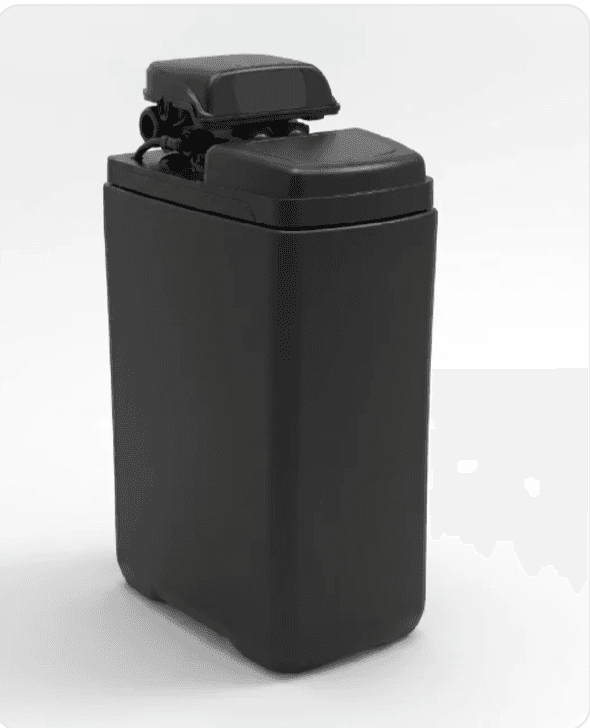
Compact, efficient softening for larger homes and small commercial sites: up to 3 m3 per hour with up-flow…
View product →