
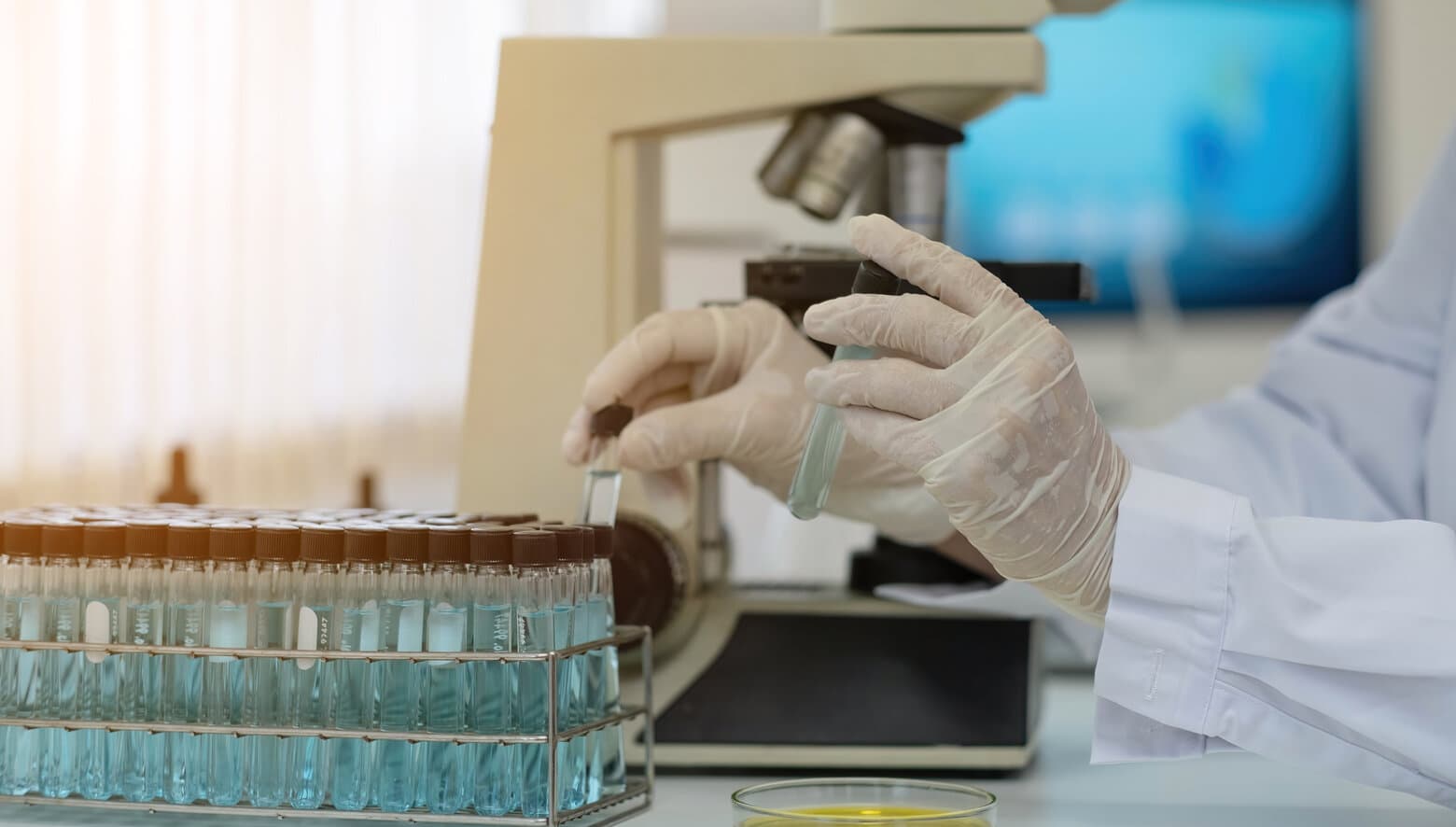
If you employ people or control a building in Britain, you have a legal duty to manage the risk from Legionella in its water systems, and a legionella risk assessment is where that duty starts. It is a written review of how water is stored, heated, moved and sprayed on your premises, who could breathe in contaminated droplets, and what you will do to keep the risk low. This guide explains who needs one, what a competent assessor looks at, the temperatures and routines that HSE guidance sets out, and the extra risk points in kitchens, cafés and bars.
TL;DR
- Employers and anyone in control of premises must assess and control the risk from Legionella. The HSE Approved Code of Practice L8 and technical guidance HSG274 set out how.
- Legionella multiplies in water between 20°C and 45°C, especially where water is still and there is scale, sludge or biofilm.
- Hot water should leave the heater at 60°C or more. Cold water should stay below 20°C. Little-used outlets need regular flushing.
- Kitchens and bars add spray taps, ice machines, glasswashers, combi ovens and beverage lines, so their assessment needs more detail than an office's.
- Employers with five or more staff must record the significant findings. Review the assessment whenever something changes.
Need an assessment, or help with the controls it recommends? Talk to Our Team about your premises.
In this article
- Who needs a legionella risk assessment?
- What the assessment covers
- How Legionella grows and spreads
- Temperatures and routine checks
- Extra risk points in kitchens, cafés and bars
- Records and reviews
- Biocides, UV and other treatment options
- Frequently asked questions
- Sources
Who needs a legionella risk assessment?
Any employer, self-employed person or person in control of premises with a water system that could expose people to Legionella must assess that risk. The duty comes from the Health and Safety at Work etc. Act 1974 and the Control of Substances Hazardous to Health Regulations 2002 (COSHH). HSE's Approved Code of Practice L8 explains how to meet it, and HSG274 gives the technical detail for hot and cold water systems, cooling towers and other plant.
L8 has a special legal status. Following it shows you have complied. If you take a different approach, you must be able to show it is at least as effective.
The duty covers far more than large plant. Offices, shops, cafés, restaurants, hotels, gyms, schools, care settings and rented homes all have hot and cold water systems. HSE notes that landlords also have duties to their tenants, and that many can assess a simple domestic system themselves. A commercial building with stored hot water, a cold water tank, showers or water-using equipment usually needs a competent person.
Which standards apply
Different documents cover different parts of the job, and the rules change once you leave Great Britain:
| Document | What it covers |
|---|---|
| ACOP L8 | The legal benchmark in Great Britain for controlling Legionella |
| HSG274 Parts 1 to 3 | Technical guidance for cooling towers, hot and cold water systems, and other systems such as spa pools |
| BS 8580-1:2019 | The British Standard code of practice for carrying out and writing up a Legionella risk assessment, including assessor competence |
| HTM 04-01 (England and Wales), SHTM 04-01 (Scotland) | Extra requirements for healthcare premises |
| Water Supply (Water Fittings) Regulations 1999 | Any treatment or dosing equipment fitted to a drinking water system must comply |
Outside the UK, other codes take over. Dubai Municipality, for example, publishes its own Legionella guideline, and ASHRAE Standard 188 is widely used in the United States. If your business runs sites abroad, check the local rules for each one.
Cooling towers and evaporative condensers
If your site has a cooling tower or evaporative condenser, you must also notify your local authority under the Notification of Cooling Towers and Evaporative Condensers Regulations 1992. These systems need specialist water treatment and their own monitoring regime, covered in HSG274 Part 1.
What the assessment covers
A suitable and sufficient legionella risk assessment answers three questions: where could Legionella grow, how could people breathe it in, and who is at risk. A competent assessor will typically:
- Map the system. Incoming main, cold water tanks, water heaters and calorifiers, pipe runs, outlets and any equipment fed from the supply.
- Measure temperatures. At the heater flow and return, and at sentinel outlets, the nearest and furthest taps on each circuit.
- Inspect for growth conditions. Scale, sediment and biofilm in tanks, heaters and spray heads, missing tank lids or screens, and poor insulation.
- Find stagnation. Dead legs left by old refits, oversized storage, and outlets that are rarely used.
- Identify who is exposed. Staff, customers, residents, and anyone more vulnerable, such as older people or people with weakened immunity.
- Write the control scheme. Who does what, how often, and how it is recorded, with a named responsible person.
The output is a written document and an action plan, not a certificate. Its value is in the routine that follows.
Does it include water sampling?
Not always. HSE says testing for Legionella is not usually required for domestic hot and cold water systems, and that temperature monitoring is a reliable way to confirm control. Sampling is needed in specific cases, such as care settings with at-risk residents or where the assessment calls for it. When it is, HSE says samples should be analysed by an accredited, competent company.
How Legionella grows and spreads
Legionella bacteria live at low levels in rivers, lakes and reservoirs. They become a problem when they get into a building's water system and find the conditions to multiply. HSE puts the growth range at 20°C to 45°C. Below 20°C they are dormant, and they do not survive above 60°C (HSE).
Three things help them grow:
- Warm water. Underheated hot water, or cold water that has warmed in a tank or a pipe run near a heat source.
- Still water. Dead legs, rarely used outlets and storage that holds more water than the building uses.
- Something to feed on. Scale, sediment, rust and biofilm.
People catch Legionnaires' disease, a serious form of pneumonia, by breathing in small droplets of contaminated water. Showers, spray taps, spa pools and cooling towers all create those droplets. Drinking the water is not the usual route.
Temperatures and routine checks
Temperature is the main control for hot and cold water systems. HSE's guidance on what to check sets out the core routine:
| Check | Target | How often |
|---|---|---|
| Water leaving the heater or calorifier | At least 60°C | Monthly, with return temperature |
| Hot water at sentinel outlets | At least 50°C within one minute of running | Monthly |
| Cold water at sentinel outlets | Below 20°C within two minutes of running | Monthly |
| Incoming and stored cold water | Below 20°C | As set by the assessment, plus tank inspection |
| Little-used outlets | Flushed through | At least weekly |
| Shower heads and spray heads | Cleaned and descaled | At least quarterly |
| Cold water storage tanks | Inspected for condition and contamination | At least annually |
Where very hot water at a basin is a scalding risk, fit thermostatic mixing valves close to the outlet. Do not turn the heater down, as that undermines Legionella control.
Our water treatment maintenance schedule guide shows how these checks sit alongside filter changes and equipment servicing.
Extra risk points in kitchens, cafés and bars
Food and drink businesses have more water-using equipment and more variable demand than an office, so their assessments need more detail. Watch these points in particular:
- Pre-rinse spray taps. They create a fine mist right where staff stand. Descale and disinfect the heads on schedule.
- Ice machines. They hold water, sit in warm kitchens and feed ice straight into drinks. Service and sanitise them to the maker's schedule and keep their inlet filters in date. Our article on water quality for ice production covers the filtration side.
- Glasswashers, dishwashers and combi ovens. Steam and spray, plus warm water held inside the machine.
- Coffee machines and beverage lines. Mains-fed lines can stagnate overnight or over a closed weekend.
- Water dispensers and coolers. Mains-fed units should be cleaned and sanitised on a planned schedule, with filters changed on time.
- Seasonal areas and staff showers. Terraces, function rooms and changing areas that sit unused for days.
- Refits. A new kitchen layout often leaves capped branches full of still water. Cut dead legs back to the main run.
Food businesses can fold these checks into their HACCP records, alongside fridge temperatures and cleaning logs, so they happen on the same rota.
Records and reviews
HSE says employers with five or more employees must record the significant findings of the assessment. Everyone else is strongly advised to keep records too, because records are how you show the controls are working. A good log includes:
- the assessment and its action plan, with the date and the assessor's name
- the named responsible person
- monthly temperature readings and weekly flushing records
- tank inspections, descaling, disinfection and equipment servicing
- any problems found and what was done about them
The law does not set a fixed review date. Review the assessment whenever there is reason to think it is out of date: after a refit, a change of use, new equipment, a change in occupancy, or a failed temperature check. Many businesses also review it on a set cycle so it is never forgotten.
Biocides and other treatment options
Temperature is the usual first line of control. Where it cannot do the job alone, HSG274 Part 2 describes several water treatment methods. Each needs careful dosing, weekly checks of the equipment and regular monitoring at outlets.
| Method | How it works | HSG274 points to note |
|---|---|---|
| Chlorine (sodium hypochlorite) | Topped-up chlorine kills bacteria and slows biofilm | Free chlorine of 0.5 to 1.0 mg/l at outlets. Less effective against biofilm that is already established |
| Chlorine dioxide | A gas dissolved in water that gets into biofilm well | 0.1 to 0.5 mg/l at outlets. Harder to hold in hot water because it gasses off |
| Copper and silver ionisation | Electrodes release copper and silver ions into the water | Works in hot and cold systems. Hard water and softeners affect it, so placement matters |
| Silver stabilised hydrogen peroxide | A solution injected into the water | Follow the maker's instructions and validate it. Not for systems feeding dialysis units |
| Ozone and UV | Treat water at the point where they are fitted | No residual in the pipework further on, so large systems may need several units |
Any biocide added to drinking water must comply with the water quality and water fittings regulations, so choose and install it with care. In healthcare premises, HSG274 does not allow hot water to be run below 60°C with a biocide as the main control where patients are at higher risk.
Where UV disinfection fits
UV disinfection treats water as it flows past a UV-C lamp, damaging the DNA of bacteria so they cannot multiply. It adds no chemicals and needs no contact tank. It does not leave any residual in the pipework, so it works alongside temperature control, flushing and good system design, never instead of them. For a closer look at how it compares with chemical methods, see UV disinfection vs chemical treatments.
Our SovSafe UV range runs from whole-site units to compact point-of-use sterilisers for a single outlet, dispenser or vending machine. Our guide to commercial UV water disinfection explains sizing and servicing.
Want to know whether UV suits your site? Request a Quote with your flow rate, the outlets or equipment you want to protect, and your current Legionella controls.
How Sovereign Water helps
We carry out legionella risk assessments for UK businesses in line with L8 and HSG274, and we design, install and maintain the water treatment that the assessment often calls for: UV, filtration and scale control for kitchens, cafés, hotels and offices. Our maintenance plans can take on filter changes, sanitising and equipment servicing, so the routine does not depend on someone remembering.
Frequently asked questions
Is a legionella risk assessment a legal requirement?
Yes, for employers and anyone in control of premises with a water system that could expose people to Legionella. The duty comes from the Health and Safety at Work Act and COSHH, and HSE's ACOP L8 explains how to meet it.
How often should a legionella risk assessment be done?
The law does not set a fixed interval. Review it regularly and whenever something changes, such as a refit, new equipment, a change of use or a failed temperature check.
Who can carry out a legionella risk assessment?
A competent person: someone with the knowledge and experience to understand your system and its risks. For a simple domestic system, HSE says many landlords can do it themselves. Commercial premises usually use a specialist.
What temperature kills Legionella?
HSE says Legionella does not survive above 60°C, which is why hot water should leave the heater at 60°C or more and reach at least 50°C at the outlet within one minute.
Do ice machines and coffee equipment need to be included?
Yes. Any equipment fed from the water system that holds water or creates spray should be in the assessment and on a planned service schedule.
Talk to us about Legionella control
Tell us about your premises, the water equipment you run and any controls already in place. We will recommend a practical next step, from a risk assessment to treatment and maintenance. Get in Touch.
Sources
- Health and Safety Executive, Approved Code of Practice L8
- Health and Safety Executive, HSG274 Legionnaires' disease: technical guidance
- Health and Safety Executive, Legionnaires' disease: what is it? (growth range 20°C to 45°C, accessed 8 October 2026)
- Health and Safety Executive, Legionella in health and social care (dormant below 20°C, does not survive above 60°C)
- Health and Safety Executive, Hot and cold water systems: things to consider (temperatures and checking frequencies, accessed 8 October 2026)
- Health and Safety Executive, Legionella and landlords' responsibilities (record keeping, review and testing, accessed 8 October 2026)
- Health and Safety Executive, HSG274 Part 2: the control of legionella in hot and cold water systems (PDF) (biocide methods and target levels, accessed 8 October 2026)
- British Standards Institution, BS 8580-1:2019 Water quality. Risk assessments for Legionella control. Code of practice
- The Notification of Cooling Towers and Evaporative Condensers Regulations 1992