
Commercial water testing before filtration system selection should answer a practical question: what does the water at this site need the new system to change? A postcode, supplier report or handheld TDS reading can provide context, but none of them replaces a representative sample from the water route that will actually feed the equipment.
This guide helps UK facilities and hospitality teams decide where to sample, what to test and how to write a filtration specification.
TL;DR
- Map the water route before sampling. Tanks, pumps and internal pipework can affect the proposed equipment inlet.
- Test for the decision you need to make. Hardness, TDS, pH, turbidity, chlorine and microbiology answer different questions.
- Do not use a TDS reading as a substitute for hardness or a contaminant analysis.
- For private testing, the Drinking Water Inspectorate advises that samples are collected, transported and analysed by a trained person using accredited methods.[6]
- Give potential suppliers the inlet results, target outlet quality, demand, flow, pressure and maintenance constraints in writing.
In this article
- Start with the treatment decision
- Map the water route through the building
- Choose representative sampling points
- Which water tests belong in the brief?
- Hardness and TDS are not interchangeable
- How to take a defensible commercial water sample
- Turn the results into a filtration specification
- Common specification mistakes
- Frequently asked questions
Start with the treatment decision
A useful test plan starts with the application, not a generic laboratory package. Define what the site must protect or improve:
- drinking water taste and odour;
- coffee, ice or beverage consistency;
- scale protection for hot-water equipment;
- sediment control before an appliance or process;
- reduction of a known substance identified by analysis;
- water quality after a storage tank or internal distribution system.
Each objective needs different evidence. Scale needs hardness, temperature and demand. Taste may require chlorine and pH. Visible particles may justify turbidity testing. "Poor water quality" alone does not justify reverse osmosis.
Where chlorine, taste or odour is the measured issue, the Regent Carbon 3072 shows the type of activated-carbon route that can be assessed against the duty.
regent-carbon-3072
If the requirement is still broad, use the commercial water treatment guide to separate filtration, softening, reverse osmosis and disinfection before ordering tests.
Map the water route through the building
Draw a simple route from the incoming supply to the proposed filtration point and then to the protected outlets. Include:
- the incoming stop valve and meter;
- break tanks or cold-water storage tanks;
- booster pumps and pressure zones;
- existing filters, softeners or dosing equipment;
- long branches, dead legs and low-use outlets;
- the proposed inlet and the furthest relevant point of use.
This matters because the water supplier's result describes the public supply, not necessarily every condition inside the building. The DWI says the condition of a storage tank can affect water quality and that building owners are responsible for the plumbing system and its maintenance.[5] HSE guidance also stresses secure tank covers, screened vents, regular water movement and avoiding unnecessary storage because poor turnover can encourage deterioration.[2]
DWI says water companies test local water and normally provide results on request.[6] Compare it with the equipment inlet after storage or treatment.
Choose representative sampling points
Most straightforward projects need one primary design sample: the proposed filtration inlet under normal operating conditions. Add comparison points only when they answer a specific question.
| Sampling point | What it tells you | When it is useful |
|---|---|---|
| Incoming mains or building entry | Baseline before internal storage and distribution | Comparing supplier water with conditions inside the premises |
| Outlet from a storage tank or booster set | Effect of storage, turnover and the normal pumped route | Tank-fed buildings, hotels and larger estates |
| Proposed filtration inlet | The water the system must treat | Every project |
| Critical point of use | What reaches the protected appliance or outlet | Long pipe runs, complaints or commissioning checks |
| Before and after existing treatment | Whether current equipment is changing the water as intended | Refurbishment, replacement or fault finding |
Do not combine locations in one bottle. Record each point so another person can repeat the test.
Sample during representative occupancy and flow. If weekday operation and weekend closure create materially different conditions, the plan may need more than one visit.
Which water tests belong in the brief?
There is no universal commercial filtration panel. Choose parameters from the application, water route, observed problem and risk assessment.
| Parameter | What it helps assess | Typical specification question |
|---|---|---|
| Total hardness as CaCO3 | Calcium and magnesium scale potential | Is softening or scale control required? |
| Conductivity or TDS | Broad dissolved-mineral load | Is a membrane process worth assessing, and what recovery or pretreatment information is needed? |
| pH and alkalinity | Stability, corrosion tendency and treatment compatibility | Will the proposed media or membrane operate within its stated range? |
| Turbidity and visible sediment | Suspended material and particulate load | Is prefiltration needed, and at what grade? |
| Free chlorine | Taste, odour and compatibility with carbon or membrane treatment | Is chlorine reduction part of the outlet target? |
| Iron and manganese | Staining, deposits and media selection | Does the result justify targeted removal rather than a general filter? |
| Chloride, sulphate and sodium | Wider chemistry and process suitability | Are there corrosion, taste or application-specific limits to consider? |
| Microbiology | Hygiene or water-safety concerns | Is specialist sampling required under the site's water-safety plan? |
This table is a planning tool, not a direction to order every test. Private supplies and regulated uses have separate requirements. DWI guidance for commercial private supplies bases monitoring on risk, supply type and volume.[1] A mains-fed project should not copy that panel without checking whether it applies.
Where turbidity or suspended solids are confirmed, the Regent Sediment 3072 is a commercial depth-filtration example to assess against flow and backwash requirements.
regent-sediment-3072
Hardness and TDS are not interchangeable
Hardness is mainly dissolved calcium and magnesium. DWI expresses it as milligrams per litre of calcium carbonate and warns that broad maps contain local variation.[4] Use our UK water-hardness checker for an initial indication, then confirm the proposed inlet with a supplier or site result.
TDS is a broader estimate of dissolved material. A handheld meter usually estimates TDS from electrical conductivity. It does not identify which ions are present and it does not report hardness directly.
Two waters can have similar TDS but different hardness, sodium, chloride or alkalinity. A TDS pen cannot select a softener, carbon filter or membrane.
Use hardness for scale and softening. Use TDS within a wider chemistry picture, and targeted analysis when the decision depends on one substance.
If measured hardness is the main problem, the compact Regal 250 is one small-commercial softening option to size against demand, flow and regeneration conditions.
regal-250-water-softener
How to take a defensible commercial water sample
The DWI says private samples should be collected, transported and analysed by a trained person using accredited methods.[6] UKAS provides a directory of accredited testing laboratories, but you still need to check that the laboratory's accredited scope covers the parameters and methods you require.[3]
A sampling instruction should state:
- the exact point and whether it is pre- or post-treatment;
- date, time, operating condition and tank or pump status;
- recent shutdowns, plumbing work or treatment changes;
- the laboratory's flushing, bottle, preservation and delivery instructions;
- who collected the sample and when custody changed.
Do not rinse or substitute laboratory bottles. Follow its handling instructions and distinguish calibrated field readings from laboratory results.
Turn the results into a filtration specification
A laboratory report is not yet a purchasing brief. Convert it into clear inlet conditions, outlet targets and operating duties.
Include:
- sample locations, dates, methods and inlet range;
- the outlet quality required by the application;
- daily volume, peak and sustained flow;
- static, minimum dynamic and maximum pressure;
- operating hours and permitted interruption;
- space, power, drainage, access and consumable criteria;
- commissioning limits, records and maintenance responsibility.
Ask what each stage will change, its operating conditions and the exhaustion trigger. "Improve water quality" is not an acceptance test.
Where the analysis and application justify reverse osmosis, the Majestic RO is a compact commercial membrane system to assess against feed quality, output demand and pretreatment needs.
majestic-ro
The commercial water solutions page shows the main treatment routes. If hardness is the dominant problem, the separate commercial water-softener specification guide covers capacity, flow, regeneration and continuity in more depth.
Common specification mistakes
- Testing the wrong tap. A convenient outlet may use a different tank or pressure zone.
- Relying on a postcode average. It is useful context, but DWI notes that local hardness variation may not appear on a broad map.[4]
- Buying from TDS alone. TDS does not identify hardness or a particular contaminant.
- Ignoring flow and pressure. Chemistry cannot size the hydraulics.
- Ordering every laboratory parameter. Testing should answer the treatment decision and any applicable duty.
- Forgetting the outlet target. A supplier cannot prove success from inlet data alone.
- Ignoring storage and turnover. Tanks and internal plumbing may affect the water after it enters the premises.[5]
- Leaving maintenance undefined. Service triggers and verification tests belong in the original specification. Sovereign Water's maintenance service can support planned servicing once the treatment train is agreed.
Retest after plumbing work, tank cleaning, a new supply route or an unexplained change in taste, sediment, scale, pressure loss or cartridge life. Commissioning should confirm outlet targets at representative flow. Reuse the same points and methods where possible.
Frequently asked questions
1. Can I use my water company's report instead of taking a sample?
Use it as a baseline. Sample the site where tanks, treatment or internal distribution could alter the proposed inlet.
2. Is a handheld TDS meter enough to choose a filtration system?
No. It estimates broad dissolved load but does not identify hardness or individual substances.
3. Where should the main design sample be taken?
At the proposed inlet during normal operation. Record upstream tanks, treatment and sampling conditions.
4. Do I need microbiological testing before installing a filter?
Not for every purchase. Follow the site's water-safety risk assessment and the laboratory's method.
5. Should I test before and after a storage tank?
Do so when you need to separate supply quality from the effects of storage and internal distribution.
6. How much water should the laboratory receive?
Follow the laboratory's instructions. Requirements vary by parameter and method.
7. Does hard water mean the drinking water is unsafe?
No. DWI says the drinking-water regulations it oversees do not set a hardness standard.[4] Hardness is mainly an operational issue involving scale and equipment.
8. What should I send to a filtration supplier?
Send the report, water-route sketch, outlet target, demand, flow, pressure and maintenance expectations.
Talk to Sovereign Water about your site
Send the application, water route, existing test results, demand and equipment requirements. Sovereign Water can use that evidence to discuss a suitable commercial treatment specification.
Sources
[1] https://www.dwi.gov.uk/private-water-supplies/local-authorities/what-sampling-is-required: DWI: What sampling is required?
[2] https://www.hse.gov.uk/pubns/priced/hsg274part2.pdf: HSE HSG274 Part 2
[3] https://www.ukas.com/find-an-organisation: UKAS accredited organisation search
[4] https://dwi.gov.uk/consumers/learn-more-about-your-water/water-hardness-hard-water: DWI: Water hardness
[5] https://dwi.gov.uk/consumers/learn-more-about-your-water/water-storage-tanks-and-cisterns: DWI: Water storage tanks and cisterns
[6] https://dwi.gov.uk/water-testing: DWI: Water testing
Products mentioned in this article
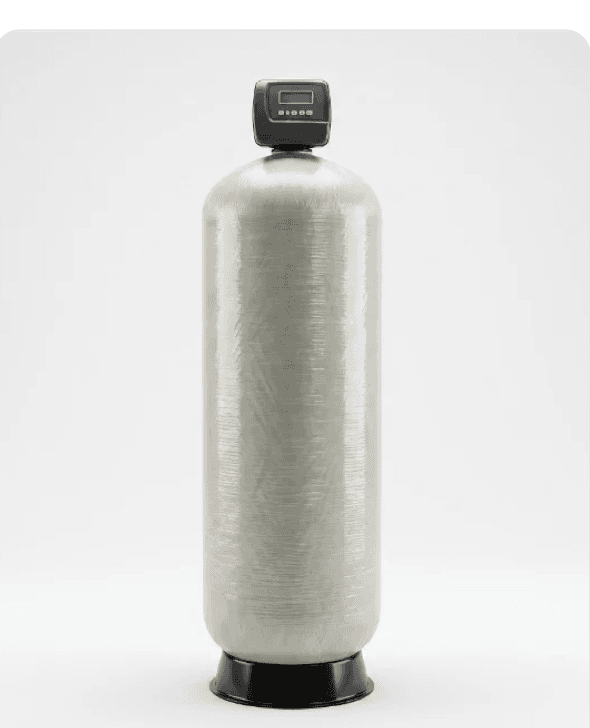
A single 30 x 72 inch activated carbon filter on a metered CE 1.5 inch control valve, holding a 180 kg Centaur bed…
View product →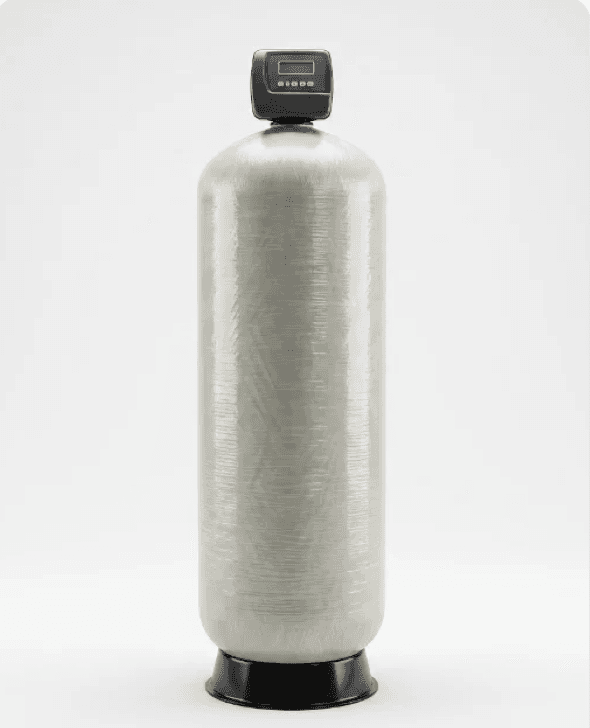
A single 30 x 72 inch auto-backwash depth filter on a metered CE 1.5 inch control valve, carrying 367.9 litres…
View product →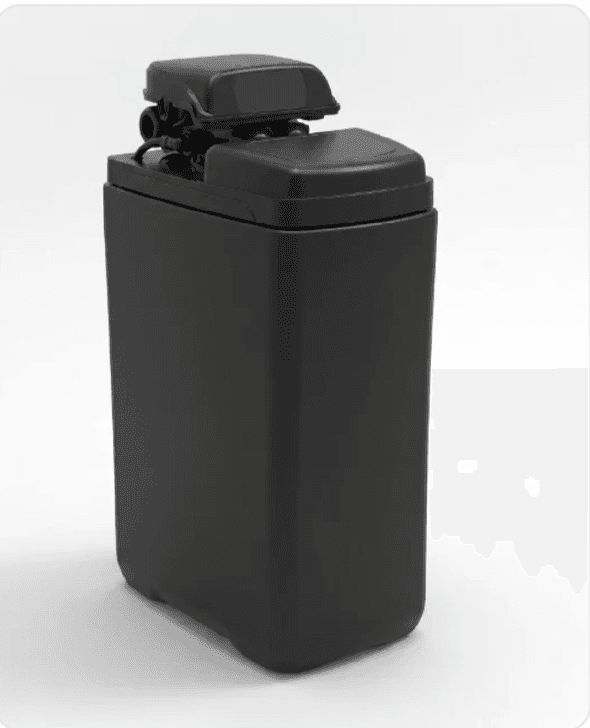
Compact, efficient softening for larger homes and small commercial sites: up to 3 m3 per hour with up-flow…
View product →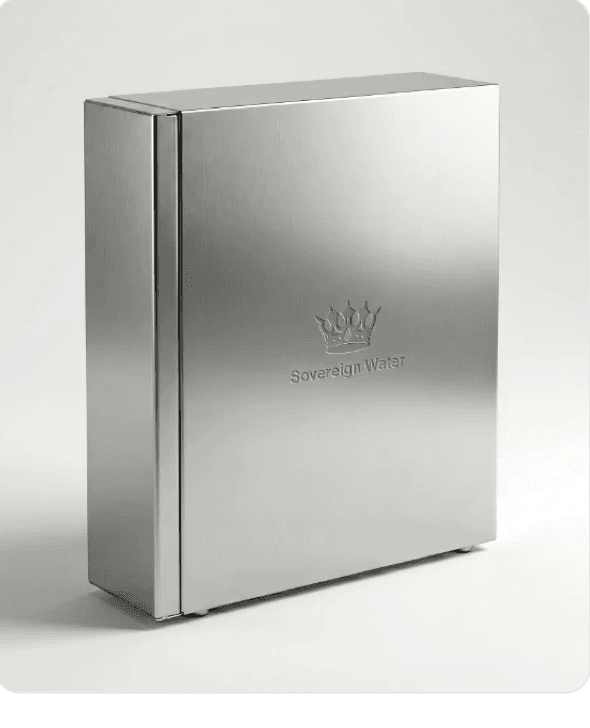
High-flow commercial reverse osmosis for high-volume food & beverage: up to 185 litres of crystal-clear purified…
View product →